
Conditions affecting the colon can range from uncomfortable and disruptive to life-threatening, and when surgical treatment becomes necessary, having the right surgical team matters enormously. The colon, or large intestine, plays a critical role in digestion and waste elimination, and surgery in this area requires precision, experience, and a comprehensive approach to care. Whether you've been diagnosed with diverticulitis, inflammatory bowel disease, or colorectal cancer, colon surgery performed by a skilled, board-certified surgeon can significantly improve your quality of life and long-term health outcomes.
At Atlanta General and Bariatric Surgery Center, our surgeons have extensive experience treating a wide range of colon conditions using minimally invasive laparoscopic techniques. As an MBSA and AAAHC-accredited outpatient surgery center in Johns Creek, we are equipped with the latest surgical technology and staffed by a team dedicated to providing personalized, compassionate care. Our 1:1 nurse-to-patient ratio means every patient receives focused attention at every stage of their procedure and recovery.
We accept most major insurance plans and offer self-pay options at competitive rates, because we believe cost should never be a barrier to the care you need. If you have been referred for colon surgery or are experiencing symptoms that concern you, we encourage you to request a consultation with our team today. We're here to help you understand your options and move forward with confidence.
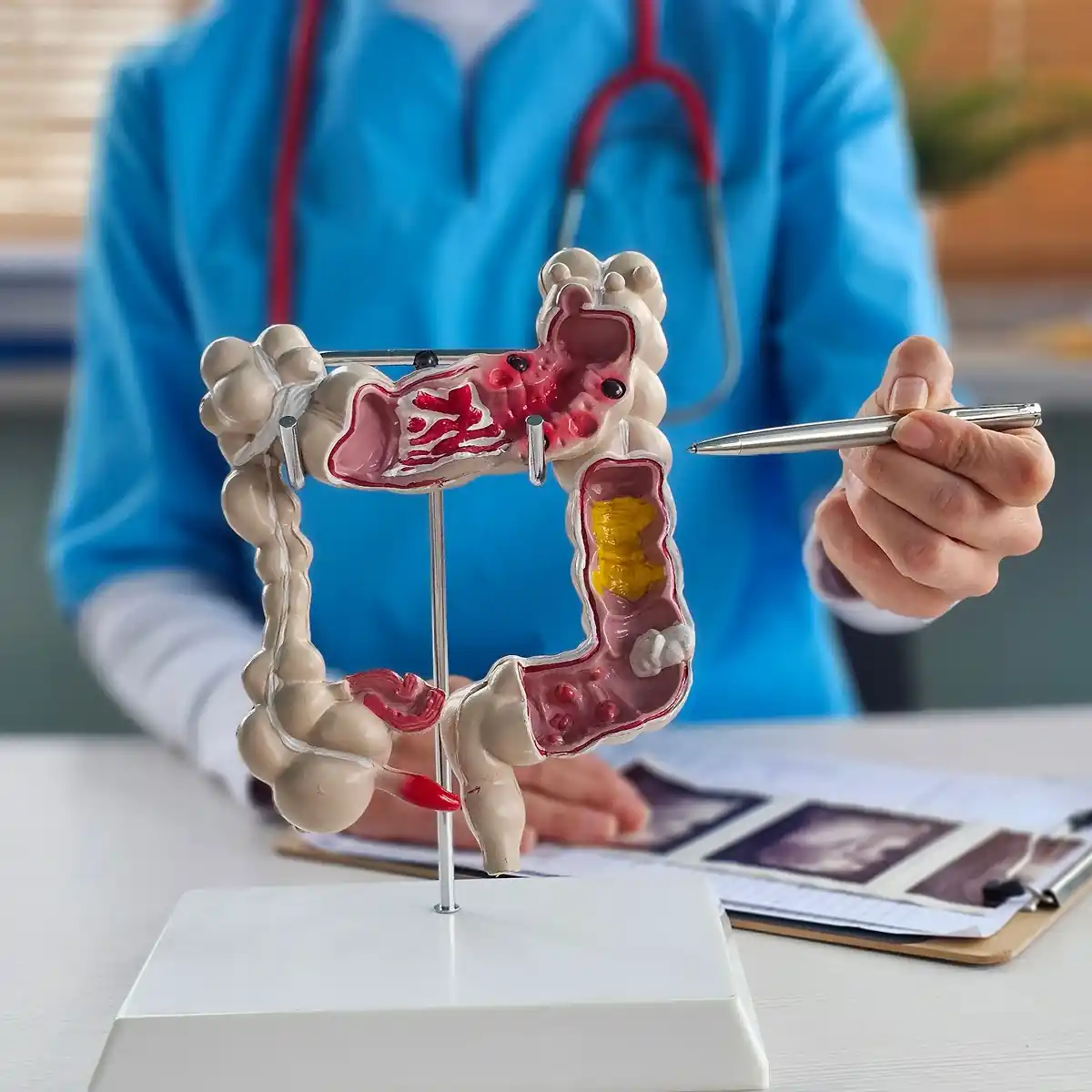
Colon surgery, also referred to as colectomy or colon resection surgery, involves the removal of part or all of the large intestine. The extent of the procedure depends on the underlying condition being treated, its severity, and the patient's overall health. Our surgeons treat several conditions that commonly require colon surgery, including the following.
Diverticulitis occurs when small pouches called diverticula that form in the walls of the colon become inflamed or infected. Mild cases can often be managed with antibiotics and dietary changes, but severe or recurring diverticulitis may require surgical removal of the affected section of the colon. Without surgical treatment, complications such as perforations, abscesses, or fistulas can develop.
Inflammatory bowel disease, which includes both Crohn's disease and ulcerative colitis, causes chronic inflammation of the digestive tract. Symptoms can include persistent diarrhea, abdominal cramping, rectal bleeding, fatigue, and unintended weight loss. When IBD symptoms cannot be adequately managed through medication, or when complications develop, colon surgery may be the most effective path to meaningful relief. Surgical options vary depending on the diagnosis and may include removing the damaged section of the colon or, in some cases, the entire colon.
Colorectal cancer originates in the colon or rectum and is one of the most common cancers diagnosed in the United States. When detected, surgical intervention is typically required to remove the cancerous portion of the colon, a procedure known as colectomy. Early-stage colorectal cancer may require only a partial colectomy, while more advanced cases may necessitate a more extensive resection.
Types of colectomy our surgeons perform include:
Wherever possible, our surgeons use laparoscopic techniques to perform colon surgery through small incisions, reducing postoperative pain, minimizing scarring, and shortening recovery time compared to traditional open surgery. Our team provides detailed pre-operative guidance and comprehensive post-operative support to ensure the best possible outcome for every patient.
Colon surgery, or colectomy, is a surgical procedure in which part or all of the large intestine is removed. It becomes necessary when conditions affecting the colon cannot be adequately treated through medication or other non-surgical means. Common reasons for colon surgery include severe or recurring diverticulitis, inflammatory bowel disease that has not responded to treatment, colorectal cancer, colon polyps that cannot be removed by colonoscopy, and certain structural abnormalities of the colon. Your surgeon will evaluate your diagnosis, imaging results, and overall health to determine whether colon surgery is the right course of action and which type of procedure is most appropriate.
There are several types of colectomy procedures, and the right one for you depends on the nature and extent of your condition. A partial colectomy, or colon resection, involves removing only the diseased segment of the colon, with the healthy sections reconnected afterward. A hemicolectomy removes either the right or left half of the colon. A sigmoid colectomy targets the lower portion of the colon, which is commonly affected by diverticulitis. A total colectomy involves removing the entire colon and is typically reserved for conditions that affect the full length of the large intestine. Our surgeons will review your specific situation and recommend the colectomy type that offers the best outcome for your diagnosis and long-term health goals.
The cost of colon surgery varies depending on the type of procedure performed, your insurance coverage, and your individual treatment plan. Because Atlanta General and Bariatric Surgery Center is a free-standing outpatient surgery center rather than a hospital, our costs are often significantly lower than hospital-based surgical care. We accept most major insurance plans, and self-pay options are available at competitive rates. We encourage you to contact our office so our team can help verify your insurance benefits and give you a clear understanding of your expected costs before you commit to moving forward.
If you're looking for an experienced colon surgeon in the Atlanta area, Atlanta General and Bariatric Surgery Center in Johns Creek is ready to help. Our board-certified surgeons specialize in minimally invasive colon surgery and are committed to delivering expert, compassionate care to every patient.
Getting started is easy — call our office at (678) 691-6257 or request an appointment online. We serve patients throughout Metro Atlanta and welcome those traveling from across the Southeast. We look forward to discussing your options and helping you take the next step toward better health.